Blog

  • K Nandakumar, Suntech

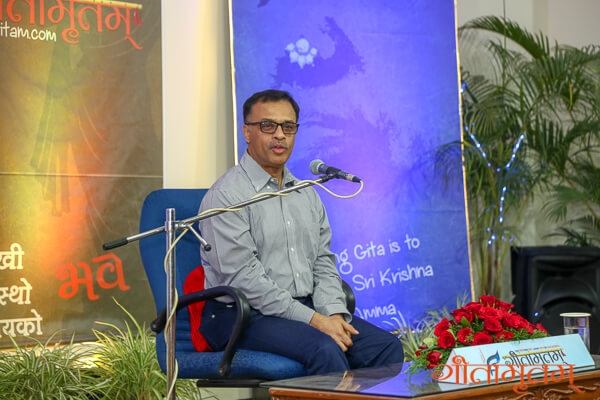
    K. Nandakumar, founder & CEO of SunTec technologies.

     The technology evangelist with more than two decades of experience under his belt came across as a tall figure in thought leadership, who has won several awards and accolades for his business acumen. His vision has empowered SunTec to foray into offer management, loyalty and relationship-based pricing and transform the company into one of the global leaders in revenue management, business assurance and enterprise products in the realm of financial and telecom industries. He has delivered numerous talks across global forums such as SIBOS, 3G Mobile Forum, Indian Banking Summit and Gartner Summits etc. Mr. Nandakumar, who holds master’s degrees in management and physics, is also a widely read writer who regularly contributes to various technology-oriented newsletters and blogs.

  • Sripad H Ghaligi

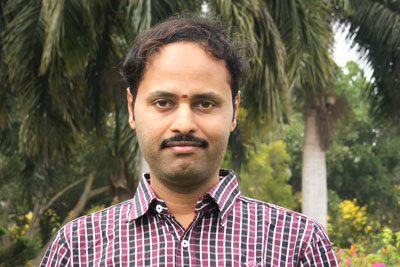
    Dr Sripad H. Ghaligi, PhD in Yoga Psychology (Bhagavad-Gita and Yoga Sutra) from Mysore University. Dr Sripad holds a master’s degree in Sanskrit and M. Sc. in Yoga from S-VYASA University, Bangalore.

    He has learned Veda, Vedanta and Yoga in traditional Gurukula system from Veda Vijnana Gurukulam, Bangalore and has conducted several training camps and workshops for students and teachers in these topics.

    He has been a resource person to various cultural organizations and the Karnataka Govt. also took his assistance for the Department of State Education Research and Training(DSERT) to design the syllabus for Yoga classes. His research paper on the topic titled ‘Effect of Vedic Chanting on Memory and Sustained Attention’ was published in Indian Journal of Traditional Knowledge.

  • Mananam 2015 -Stay with SthitaPranja – for 5 days

    The first Mananam camp – Stay with Sthitapranja – for 5 days was conducted at Amritapuri. Selected verses from the 2nd chapter were taken for discussion. Quiz and guest lectures by Prof Balakrishnan, Amrita university; Sachin Dante former New Yorker journalist; Br Subhamrita of MAM were there.

    The students had Satsang, bhajan and meditation was there.  The question & answer session they had directly with Amma was the highlight of the camp  – sitting at the feet of a ‘SthitaPranja’ and learning Gita.

  • What is the proof of Mahabharata? Is it not just a story?

    Q: Some people tell that Gita and Mahabharata happened only in the minds of people. Is there any conclusive scientific evidence for these events?

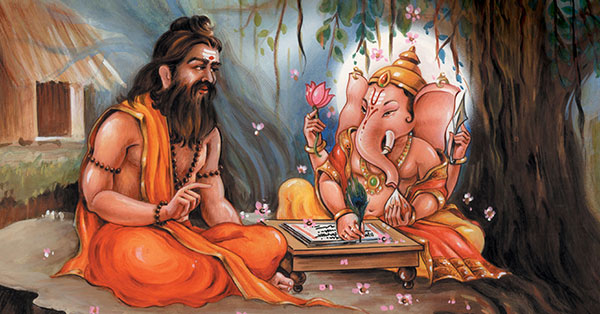
    A: Vyasa wrote Mahabharata. Existence of Vyasa is a proof for the existence of Mahabharata. Ramayana and Mahabharata are “Itihasam” – iti iha asam – which means, it happened like that. Unlike Puranas, which were stories, the former are historical. Characters in Itihasa lived and walked on this earth. But the most of characters in Puranas are imaginative.

    vyasa-ganesh

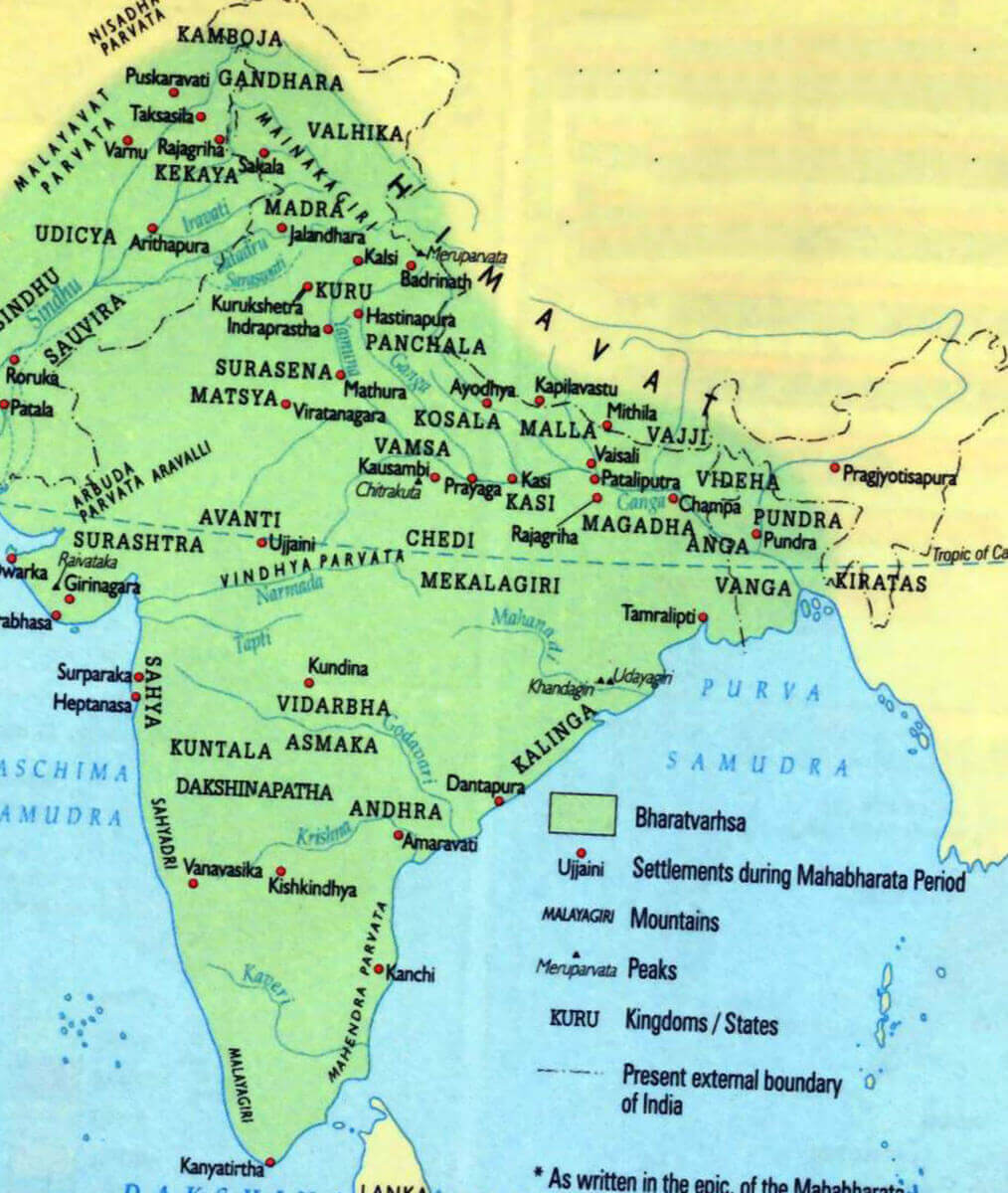
    All the places mentioned in Mahabharata still exists in the same name or similar name. There many other stories from various places which mention about Mahabharata and the places and incidents. Recently Archeological Survey of India have excavated the city of Dwaraka. Indraprasth, Kurushetra, etc still exist with the same names.

    The description of all the Akshonis, weapons used, where it happened, when it happened is completely available and is proved through scientific evidences.
    Apart from all these, in Mahabharata, there are mention of specific astrological signs. With Indian astronomical calculations we can trace back the exact dates of when it happened.

    Though there are variety of research results about the exact dates, every study has come to the conclusion that Mahabharata happened about 5000 years ago, Ramayana about 8000 years and Upanishads were discovered about 10,000 years.

  • Sri Krishna shares his profile

    In Gita, Sri Krishna tells that only by believing in me can one attain eternal peace. Doesn’t this mean Sri Krishna is not acknowledging that other forms of worship are meaningless? Does it also mean that worshiping other forms will incur sin – as suggested in other religious texts?
    kesava

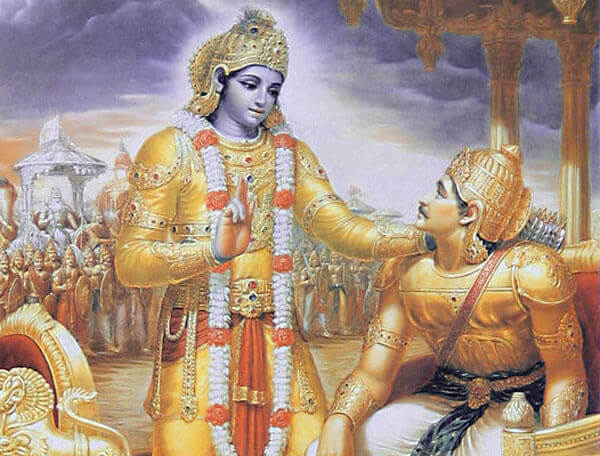
    Sri Krishna was not referring to his physical form, when he says “me”. In Chapter 4 Krishna talks about himself; his profile – “I am unborn, I do not undergo changes, I am the Lord of all beings, but controlling the nature I manifest wherever I want through my own power, to uplift the dharma.” That is the description on his profile. Hence when Sri Krishna says ‘ME’, he is not referring to his physical form, but the God principle.

    अजोऽपि सन्नव्ययात्मा भूतानामीश्वरोऽपि सन् । प्रकृतिं स्वामधिष्ठाय सम्भवाम्यात्ममायया ॥

    Even after telling the whole Bhagvad Gita, Sri Krishna asks Arjuna to think, reflect upon the ideas and decide and act according to what he feels right. It is totally left to Arjuna to decide. Where can you find such freedom of thought and choices?
    All our sastras are discussions between the teacher and student. These are no commandments.

    Worshipping any form is not meaningless. In Chapter 4, once again Sri Krishna tells that worshiping any form is worshipping me (me = lord of all beings). We worship the Lord through the medium of stone, metal, clay or any other materials. We are not worshipping the stone, we are worshipping the Lord. We see the divine in them. Every being in this world is nothing but divine. Hence we worship everything. There are temples even for ants, lizards, snakes, plants, trees, rivers, land, mountains, sea, fire, air, and even space! almost everything. We worship children, parents, teachers, husbands, wives.. the list is endless. Everything need to be worshiped and respected and is in line with what Sri Krishna told. Seeing any form we can connect to the divine. In short, by worshipping any form we will reach the divine – because only divine exists. According to Sanatana Dharma Creation and the Creator are not two, but one.
    Worship happens when love and respect both exists. When we worship, we earn merit – there is no sin. When we worship our parents, teachers and Guru, we earn the merit.

    Sin is not a concept that is properly understood in our context. It has different connotation in other religious systems. According to Gita, we are results of our own karma.
  • Gita transmission: the bandwidth and connectivity were very high

    Q: How could have Sri Krishna told 700 verses of Gita on the Battlefield, making Arjuna understand all the secrets of life? When people spent years and years studying Gita, how could Sri Krishna possibly convey the entire meaning of Gita in the battle field?

    A: Arjuna was a learned person, with knowledge of many Sastras. Currently, he was deluded — not able to decide what is right and what is wrong. Sri Krishna might have inspired Arjuna through few words and that would have been enough to convey the ideas. All the ideas in Gita are taken from Upanishads / Vedas. It is all combined and conveyed to Arjuna in a way he could understand.

    gita-song

    During that time of Gita, Arjuna and Krishna were in a totally different dimension. You could say that “the bandwidth and connectivity were very high.” Between a disciple and Guru, the connection should be like that. It was in total Love. That Love can transcend time. Later after the war when Arjuna asked Sri Krishna to repeat the Gita again, Sri Krishna says that he was in a different mood at that time, and he is not now, so he can’t repeat.

    When one sits with his/her girlfriend or boyfriend, hours seem to pass in seconds!. In Love one transcends time. Arjuna’s devotion to Sri Krishna could have made it possible for Sri Krishna to convey entire Gita to Arjuna. But, the question should be whether Gita is helpful to our life. We need only to be interested in the ideas discussed here.


    Note: The original Mahabharata, as written by Jaya had 24,000 slokas and later expanded to 1,24,000.

  • Live according what conscience says, not what mind says

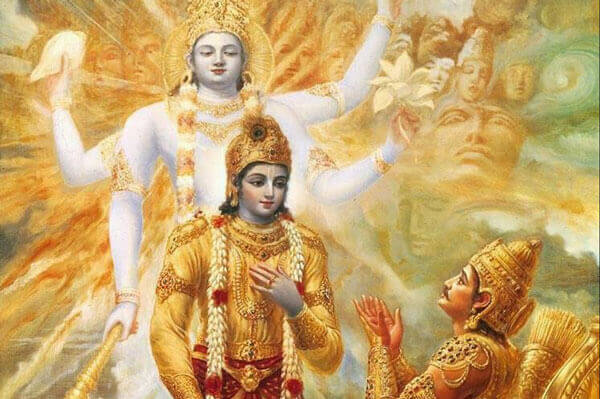
    viswaroop
    Arjuna had Krishna to show him his Dharma. What hope do we have in our moments of confusion?

    Sri Krishna should not be confused as just a person. It is the discriminative power (the pure intellect or the conscience) within us. We need to awaken that. You must know how to tune to Krishna. Then we can listen to that “Gita” specifically made for you by “your Krishna”. Follow that Gita. By learning Bhagavad Gita, we will know what is mind and what is conscience and will be able to live not according what mind says, but according to what conscience (mana: sakshi) says.

  • There are many versions of Gita available. Which is the correct one?

    Q: There are many versions of Gita available. Which one is the correct one? How do we learn Gita in the right way?

    All versions are correct. Gita is for all – each one sees it differently.  Each one looks at Gita with his own eyes, mind and vasanas. They understand it according to their capacities.

    gita teaching


    Gita remains the same though different people have written commentaries on Gita. Every one is right. If you like one commentary read it,  but don’t stop there. Create that enquiry mind until it gives the ultimate answer till no more doubt remains in you. Whichever Gita you read / follow, the importance should be given to this enquiry lead mind. Question every aspect till you are clear.

    Gita remains as it is, pure. It is like a river. Some poets sit and write about the river, some uses it for irrigation, some uses to wash cloths, some take bath in it, some drink it, there are people who spit and abuse the sanctity of the river. Similarly, Gita is the same. You can take whatever from Gita accordingly. Gita is taught to children, householders, sanyasins etc.  As we grow, as our awareness grows, we experience different realms of Gita, though the words are the same.

    Many have written commentaries according to the needs and situation of the society at those time. You reflect and meditate upon it – over time you will understand. Acharyas like Madhva, Ramanuja and Sankara have written commentaries upon Gita. They had their own agenda, but Sri Krishna’s words remains the same. Listening directly from Sri Krishna, Arjuna didnt accepted whatever Krishna said,  Arjuna never stopped questioning Krishna. Unless he is convinced, he was never ready to accept. Similar, enquiry mind should be there. Ask questions with the mind to know. Invoke the attitude of enquiry within and not to get carried away with commentaries.

    Most of us do not know Sanskrit and hence need to depend on someone who translated it to English. It should be noted that it is not enough just to understand Sanskrit to translate. We need to understand the context, setting, the society, language constraints in order to get the correct meaning.

    Max Muller learned Sanskrit and wrote commentaries on Vedas without even visiting India. How could he possibly understand the culture, society prevailing in India at that time? And hence his perspectives are not reflective of the truth. One word used in one sloka, might be used in another sloka with a different meaning. Word is the same, but the meaning is different according to the context. A google translation cannot give you the correct import of the slokas.  Hence, whichever Gita you read, the importance should be given to an enquiry lead mind and learn it from a Master who can explain you the diff contexts.

  • Dharma changes according to SITA

    In the Gita, Krishna advises Arjuna on performing his Dharma as a warrior and not take on somebody else’s Dharma. But is it really that inflexible? I may be a peace loving person now, but tomorrow I may see great injustice being done and I may take up the duty of a Kshatriya to find a solution. Doesn’t ones Dharma at a point of time depend on one’s mental state and inclinations?

    dharma

    Dharma is an interesting concept. It is dynamic. Dharma changes according to SITA – Space, Individual, Time & Awareness. So what is dharma today for you may not be dharma for someone else, or it may turn out to be adharma tomorrow for you.
    Each one of us have not just one dharma (except the param dharma – supreme dharma – that is self-realization).

    As a child, parent, employee, neighbor, driver, traveller, pedestrian, human, National, etc we have so many dharma to play in life. All these dharma are important.
    As a brother one has the dharma to protect your sisters. If your conscience (“manasakshi”) tells that it is your duty to protect someone in distress, you must act accordingly. Every action has a result – it will have it’s own consequences. Good action will have good results, bad action will have bad results. One of the question we need to ask ourselves when we do our dharma is – “are our action selfless?”. As a Karmayogi, one need to offer all the results unto Him.

    As a wife, mother, daughter, self – a lady can have multiple things to do, but what is the right dharma? Be with husband, help child to learn, take care of ailing mother or go to ashram? More often than not, life is not in black and white. We need to awaken viveka (discrimination) to decide our own dharma at a particular time and place. What is your primary dharma and secondary dharma? When there is a conflict leaving the secondary, follow primary dharma.

  • Don’t take victory to your head or defeat to your heart

    Nowadays lots of management and self-help ‘gurus’ talk about using the Gita as inspiration to find success in business, office, personal life etc. Does the Gita tell us how to deal with defeat as well?

    victory

    The lessons from Bhagvad Gita teach us how to handle not just defeat but victory too. Not to take victory to your head or defeat to your heart. Beyond that it helps us to learn how to handle the opposites of life – hot/cold, victory/defeat, gain/loss, ups/downs. All these are temporary, they come and go. It teaches us to learn the world, nature of objects, relationships etc. And finally, in all these situations, how to live without loosing balance – he alone can be successful. If we can smile in defeat, there is a chance for victory.